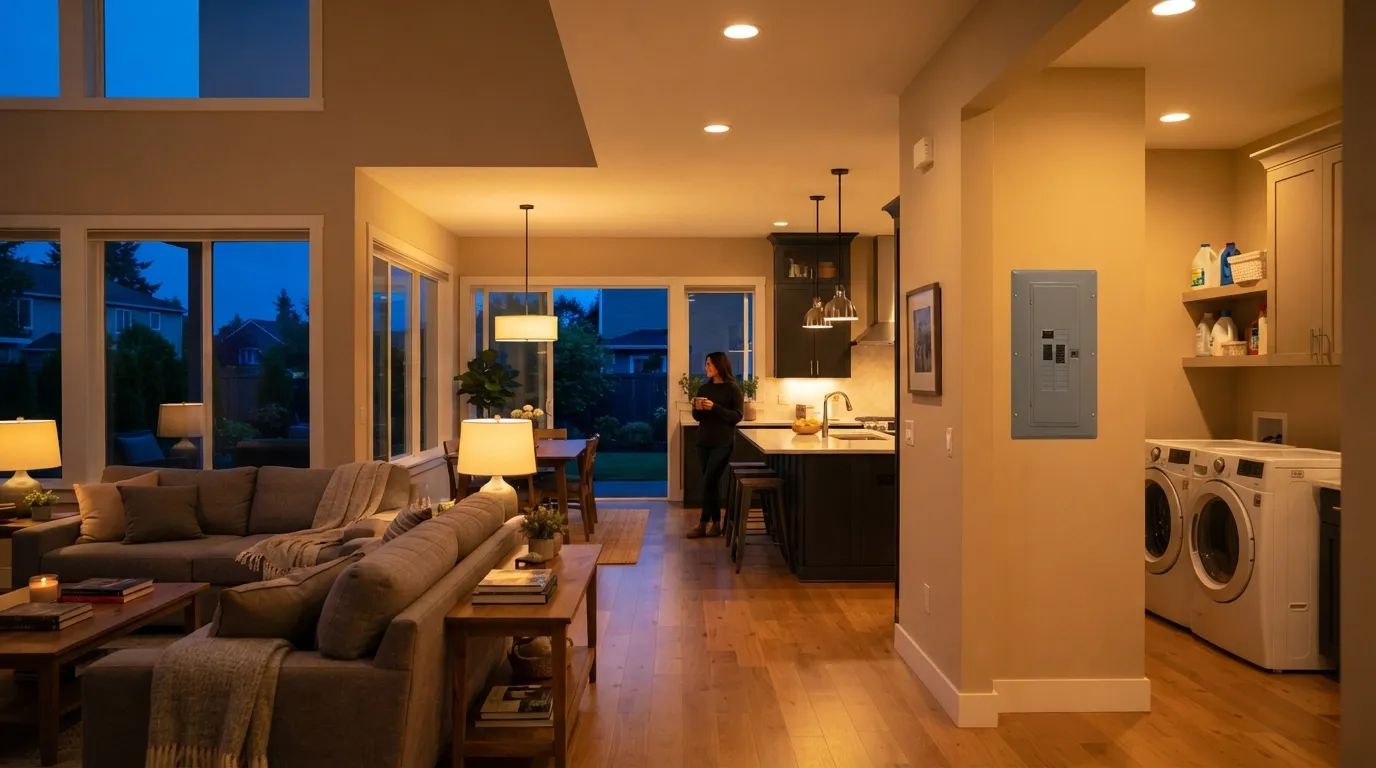
- The actual contract language
- What's covered, component by component
- The circuit overload exclusion
- The “(D.C.) wiring” question
- The 1965–1973 aluminum wiring problem
- Home warranty vs. homeowners insurance
- Costs and coverage caps
- Who this is — and isn't — right for
- How to file an electrical claim
- Frequently asked questions
The Actual Contract Language
Most home warranty content paraphrases what's covered. Here is what Choice Home Warranty's homeowner agreement actually says, quoted in full:
That is the complete electrical provision. It is short, which is useful. Electrical coverage is included in both the Basic Plan and the Total Plan — you do not need to upgrade to get it.
What's Covered, Component by Component
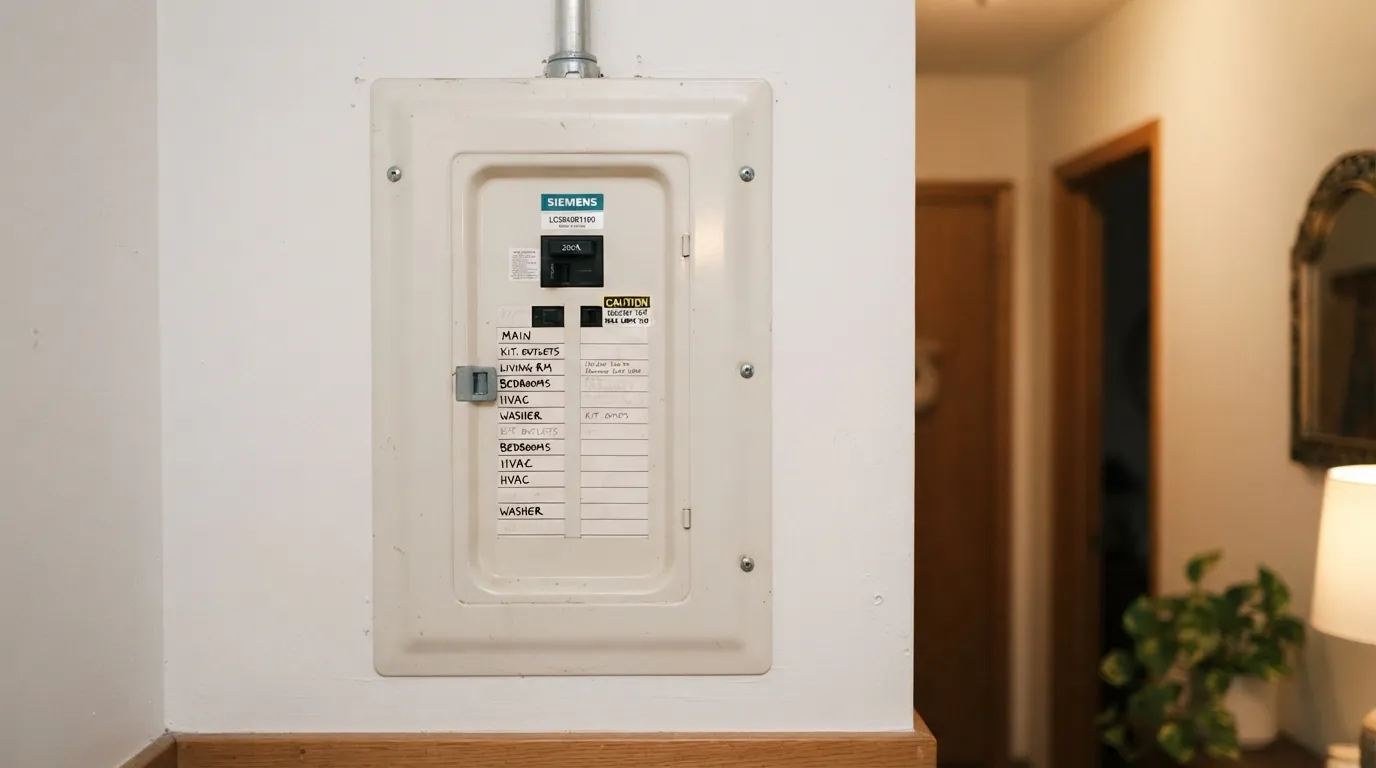
| Component | Covered | Notes |
|---|---|---|
| Electrical panels | Yes | Named in the contract. Subject to per-item coverage cap. |
| Light switches | Yes | Named in the contract. |
| Electric outlets | Yes | Named in the contract. Includes GFCI outlets. |
| Wiring | Yes | See the (D.C.) note below. |
| Light fixtures | Yes | Named in the contract. |
| Panel-to-covered-item wiring | Yes | Wiring from the panel to any covered system or appliance. |
| Ceiling fans | Yes | Covered as a separate line item in the CHW contract. |
| Doorbells | Yes | Covered on both plans. |
| Face plates | No | Explicitly excluded. Minor, but worth noting. |
| Solar system wiring | No | Complete exclusion — all components and wiring to or from. |
| Generator wiring | No | Complete exclusion. Relevant in a region with storm outages. |
| Energy management systems | No | Complete exclusion — all components and wiring to or from. |
| Circuit overload failures | No | Explicitly excluded. See the dedicated section below. |
| Lightning / storm damage | No | This is a homeowners insurance claim, not a warranty claim. |
| Code upgrade costs | No | CHW states it will not pay for modifications necessitated by repairs. |
The Circuit Overload Exclusion — Read This One Carefully
Two words in the contract. Easy to skim past. And the most likely reason an electrical claim gets denied in an older Alabama home.
If a breaker trips or a circuit fails because it is carrying more load than it was designed for, that is not a covered mechanical failure. It is a capacity problem — “circuit overload” — and it is explicitly excluded from coverage.
This matters especially in older North Alabama homes. A 1960s or 1970s house with original 100-amp service, now running a modern HVAC system, updated kitchen appliances, and a couple of EV chargers, is exactly the situation where an overload finding is plausible. A breaker that fails from mechanical wear after 25 years of normal use is a covered claim. A breaker that trips because the circuit is over-capacity is not. The difference is in the diagnosis, and the electrician who comes out makes that call.
What to do: If your breakers trip regularly, have a licensed electrician evaluate your panel before you buy a warranty. You will either confirm the panel is fine, or you will learn you have a capacity issue that no service contract was going to solve.
The “(D.C.) Wiring” Question
The contract clause says “(D.C.) wiring.” Residential branch circuit wiring in the United States is alternating current — not direct current. This reads like a typographical error in the agreement rather than a substantive limitation, and it appears identically across CHW's national, California, and Georgia agreement pages.
We are not going to interpret it here. Do not assume it limits coverage, and do not assume it does not. If you have a specific question about whether your wiring is covered, ask CHW directly before you buy. It is a fair question and they should answer it.
The 1965–1973 Aluminum Wiring Problem — A North Alabama Issue
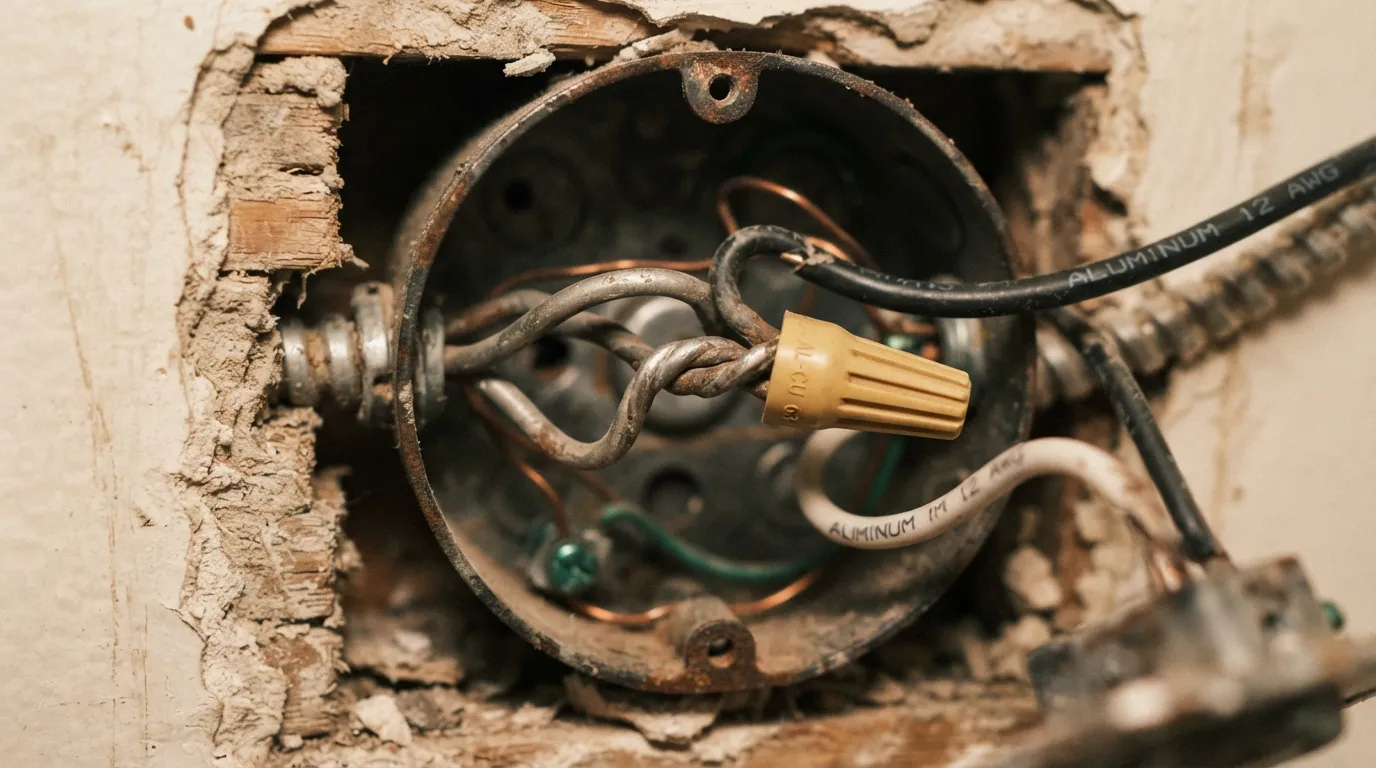
Copper prices spiked in the mid-1960s. Builders across the country switched to single-strand aluminum for branch circuit wiring. The CPSC estimates 1.5 to 2 million American homes were built with aluminum branch wiring between 1965 and 1973.
That window lines up almost exactly with Huntsville's Apollo-era expansion. A meaningful share of the housing stock across Madison County and the Tennessee Valley was built in precisely those years — neighborhoods that grew rapidly to house engineers and workers for NASA's Marshall Space Flight Center and the surrounding defense industry. This is not a national statistic that happens to apply here. It applies here more than in most markets.
What aluminum wiring actually does
The problem is not the wire traveling through the walls — it is what happens at the connections. Aluminum expands, contracts, and oxidizes differently from copper. Thermal cycling gradually loosens connections at outlets, switches, and junction boxes. Loose connections create resistance. Resistance creates heat. That is the hazard.
Where the home warranty question lands
A home warranty is a service contract for mechanical failure from normal wear and tear. Original aluminum branch wiring is a pre-existing condition of the house. Whole-house remediation — COPALUM connectors, AlumiConn connectors, or full rewiring — is a project you hire an electrician for and pay for yourself. No home warranty covers it. What a warranty can do is cover the ordinary component failures that happen alongside it: a panel component that quits, an outlet that dies, a switch that fails.
| Situation | Realistic Expectation |
|---|---|
| Breaker fails from normal wear | Likely a covered mechanical failure. Standard claim. |
| Outlet stops working | Covered component. Standard claim. |
| Panel component fails | Panels are listed as covered. Subject to per-item cap. |
| Circuit trips from overload | Explicitly excluded. Capacity problem, not mechanical failure. |
| Aluminum wiring remediation | Not what this product covers. Electrician and homeowner-funded. |
| Whole-house rewire | Not covered by any home warranty. |
| Code upgrades to complete a repair | CHW states it will not pay for modifications necessitated by repairs. |
If your home was built between 1965 and 1973: have an electrician confirm what you have before making any warranty decision. It is a small inspection cost against a real safety question — and it may also affect your homeowners insurance. Some Alabama insurers adjust premiums or require remediation on homes with active aluminum branch wiring.
Home Warranty vs. Homeowners Insurance — North Alabama Matters
These two products get confused constantly, and in a region with the thunderstorms, hail, and ice storms we see, the distinction matters for electrical specifically.
A home warranty covers mechanical failure from normal wear and tear. Your panel finally gives out after 25 years. An outlet dies from age. A switch stops working. Warranty claims.
Homeowners insurance covers sudden damage from a covered peril. A lightning strike takes out your panel in an April storm. A tree falls on your house. Flood or fire. Those are insurance claims — a warranty will not help you.
North Alabama gets real lightning activity. You may want both products. They are not substitutes. Homeowners insurance protects against sudden damage events. A home warranty protects against the slow mechanical failure of systems you live with every day. Telling someone their storm-damaged panel is an insurance claim — not a warranty claim — costs nothing and builds credibility.
Costs and Coverage Caps
| Item | Amount | Notes |
|---|---|---|
| Basic Plan monthly | ~$36/month | Includes electrical. No AC. |
| Total Plan monthly | ~$47/month | Adds AC, refrigerator, washer/dryer. |
| Service fee per claim | Verify at quote | Confirm current rate when you get your quote — this number changes. |
| Per-item coverage cap | Typically ~$3,000 | A full panel replacement can approach or exceed this. Know the cap before you buy. |
| Cash-in-lieu option | CHW's actual cost | CHW may offer cash instead of repair/replace, “which at times may be less than retail” — their contract language. |
| Wait period | 30 days | Standard industry waiting period before coverage activates. |
Service fee and coverage cap figures from this page come from third-party reviews. Pull your own quote and confirm these numbers directly with CHW before signing. Pricing changes, and what a review site published six months ago may not be what you are buying today.
Who This Is — and Isn't — Right For
- Homes 10–30 years old with original systemsComponents are past manufacturer warranty and entering the failure window.
- Buyers who want predictable repair costsMonthly cost plus a flat service fee is a budgeting tool.
- People without a trusted electricianThe dispatch network has real value if you lack a contractor relationship.
- Landlords and second-home ownersCoordination value on a property you are not always at.
- Recent buyers of an existing homeEspecially where the inspection flagged aging but functional systems.
- New construction homesStill under builder and manufacturer warranties.
- Homes with aluminum wiring expecting remediationNot what the product covers. Get an electrician's quote instead.
- Anyone with a failing system right nowPre-existing conditions are excluded. There is also a 30-day wait.
- People who want storm or lightning coverageThat is homeowners insurance — a different product entirely.
- Anyone expecting full replacement of a $10,000+ systemPer-item caps apply. Know the cap before you buy.
How to File an Electrical Claim
- File online or by phone, 24/7 — describe what is happening. You do not need to diagnose it. “The outlet stopped working” or “breaker won't reset” is enough.
- A licensed electrician is dispatched — they diagnose the cause of failure. That diagnosis determines coverage, which is why understanding the circuit overload exclusion matters before you call.
- Pay only the service fee — the electrician performs the covered repair. The warranty pays the rest directly.
Frequently Asked Questions
Yes. Choice Home Warranty covers electrical panels, switches, outlets, wiring from the panel to covered items, fixtures, and ceiling fans. Coverage is included in both the Basic Plan and the Total Plan — no upgrade required.
Yes — panels are named as a covered item in CHW's homeowner agreement. Coverage is subject to the per-item cap (typically reported around $3,000). A full panel replacement can approach or exceed that figure, so confirm the cap before you buy.
Circuit overload means a circuit is carrying more load than it was designed for. It is explicitly excluded from CHW's electrical coverage. If an electrician determines your breaker failed from overload rather than mechanical wear, the claim will be denied. This is the most consequential exclusion in the electrical section, especially for older homes now running modern appliance loads.
Not for remediation. No home warranty covers whole-house rewiring or aluminum wiring remediation. What a warranty can cover is the ordinary component failures that occur alongside it — a panel component, an outlet, a switch. If your home was built between 1965 and 1973, have an electrician confirm what you have before making any warranty decision.
No. No home warranty covers whole-house rewiring. Service contracts cover mechanical failure of specific covered components — not large-scale infrastructure projects.
No. Generators are explicitly excluded — “all components and wiring to or from a generator” are not covered. Solar systems and energy management systems are also excluded.
No. Lightning damage is a sudden event from an external cause — that is a homeowners insurance claim. A home warranty covers mechanical failure from normal wear and tear. If a storm takes out your panel, call your homeowners insurance carrier.
Yes. Electrical system coverage is in both the Basic Plan (~$36/month) and the Total Plan (~$47/month). The Total Plan adds central AC, refrigerator, and washer/dryer — not electrical, which is already included at the base tier.
Generally no. Most home warranty providers, including CHW, dispatch from their own contractor network. Confirm current policy when you get your quote — terms can change.
For most homeowners in homes older than 10 years: yes. A panel failure or significant wiring repair can run $800–$3,500. An annual warranty costs $430–$564. If your home is in the 1965–1973 window and you have not had an electrical inspection, do that first. If the inspection comes back clean, a warranty provides straightforward protection against the component failures you will face as systems age.
Free quote, no inspection required, 30-day wait period. The right time to buy is before you need it.
Get My Free Quote →